top of page
cervical disk herniation treatment in swansea

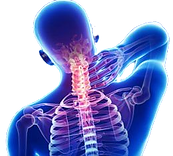
Cervical disc herniataion

What is a Cervical disc herniataion? 

Cervical disc herniation refers to a condition where one of the intervertebral discs in the neck, known as cervical discs, ruptures or bulges out of its normal position. These discs act as cushions between the vertebrae, providing support and flexibility to the spine. Causes: Degeneration: Over time, the discs in the cervical spine can degenerate due to wear and tear, leading to weakening of the outer fibrous ring (annulus fibrosus) and potential herniation of the inner gel-like substance (nucleus pulposus).Trauma: Injury or trauma to the neck, such as from a fall, car accident, or sports injury, can cause sudden herniation of a cervical disc. Repetitive Strain: Certain activities or occupations that involve repetitive neck movements or heavy lifting may increase the risk of cervical disc herniation.Genetics: Some individuals may have a genetic predisposition to disc degeneration, making them more susceptible to herniation.

Symptoms

Neck Pain: Pain in the neck area is a common symptom of cervical disc herniation, which may worsen with movement or certain positions.


Radicular Pain: Herniation of the cervical disc can lead to compression of nearby nerves, causing pain that radiates into the shoulders, arms, or hands. This pain may be sharp, burning, or tingling in nature.


Muscle Weakness: Weakness in the muscles of the arms or hands may occur, making it difficult to perform daily tasks.


Numbness and Tingling: Patients may experience numbness or tingling sensations, known as paresthesia, in the neck, shoulders, arms, or hands.


Changes in Reflexes: Reflexes may be diminished or exaggerated in affected areas.

Treatment

Depending on the severity of the cervical disc herniation and the phase of recovery, the course of treatment will be determined. It is recommended that the patient book the Hercules Injury Package, which includes:

A comprehensive assessment where we evaluate your Range of Motion (ROM), strength, posture, and pain levels to determine the most effective treatment plan.

Based on this assessment, our sports therapists will apply targeted techniques to address your specific needs.

After the treatment, we conduct a reassessment to evaluate progress and ensure optimal recovery, followed by providing a personalised rehabilitation plan with tailored exercises to support long-term healing and prevent re-injury.

If the assessment indicates that the cervical disc herniation is in its acute stage, the treatment protocol will include low-duty-cycle ultrasound therapy, utilising low-intensity ultrasound to reduce inflammation and promote tissue healing, and cryotherapy massage, where cold therapy combined with massage reduces swelling and alleviates pain.

If the assessment indicates that the injury is in the subacute or chronic stages, the treatment will involve Muscle Energy Technique (MET) and Soft Tissue Release (STR) to relieve muscle tension and improve range of motion, as well as sports massage and hot stone therapy. These techniques, using deep tissue methods and heated stones, work together to reduce muscle stiffness and enhance flexibility.

Additionally, continuous ultrasound therapy is employed to promote deeper tissue healing, while Instrument-Assisted Soft Tissue Mobilisation (IASTM) and Deep Transverse Friction (DTF) are used to address scar tissue and improve tissue mobility.

Finally, a comprehensive rehabilitation program, including resistance band exercises, is provided to maintain muscle flexibility, address weaknesses, and stabilise the cervical spine.

© 2035 by Serenity Holistics

bottom of page